
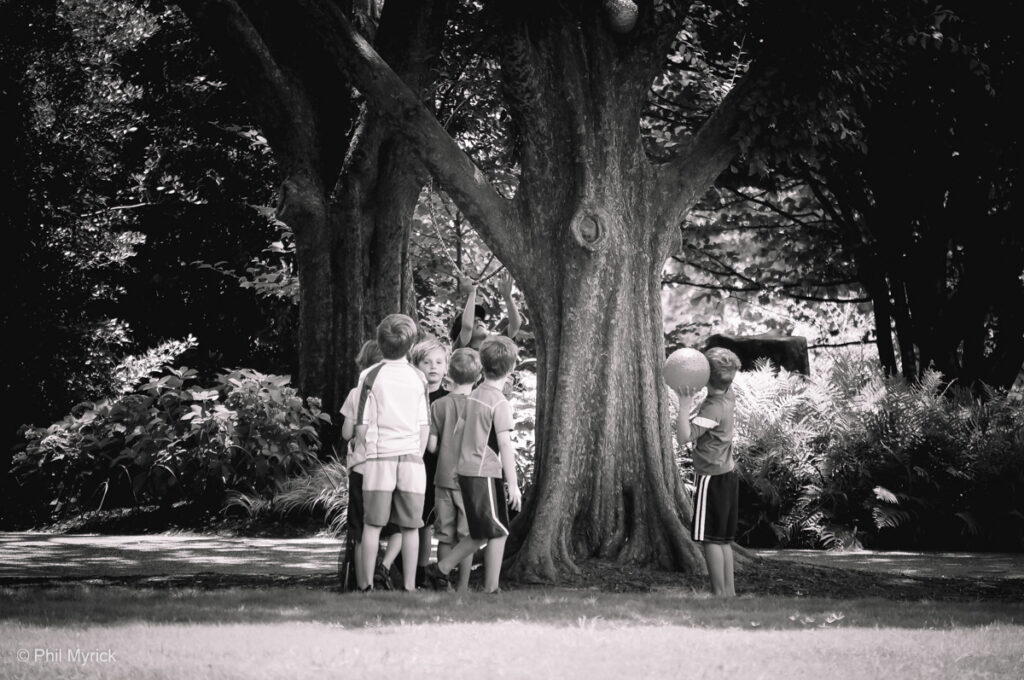
No sign tells children to gather here.
No adult assigns the activity.
There’s just a tree, enough open ground, and the shared instinct to linger.
What’s striking isn’t the play itself, but how quickly this becomes a place — one with its own rules, rhythms, and small rituals.
Years from now, the details will blur. But the feeling of being here won’t.
This is how memory forms in public space: quietly, collectively, without instruction.
For planners and designers, these moments rarely show up in drawings or programs. But they may be the most durable outcomes we ever produce. Places that don’t announce themselves — yet quietly shape how people remember being together.
What places from your childhood still live in your memory — not because of what they offered, but because of how they felt?