
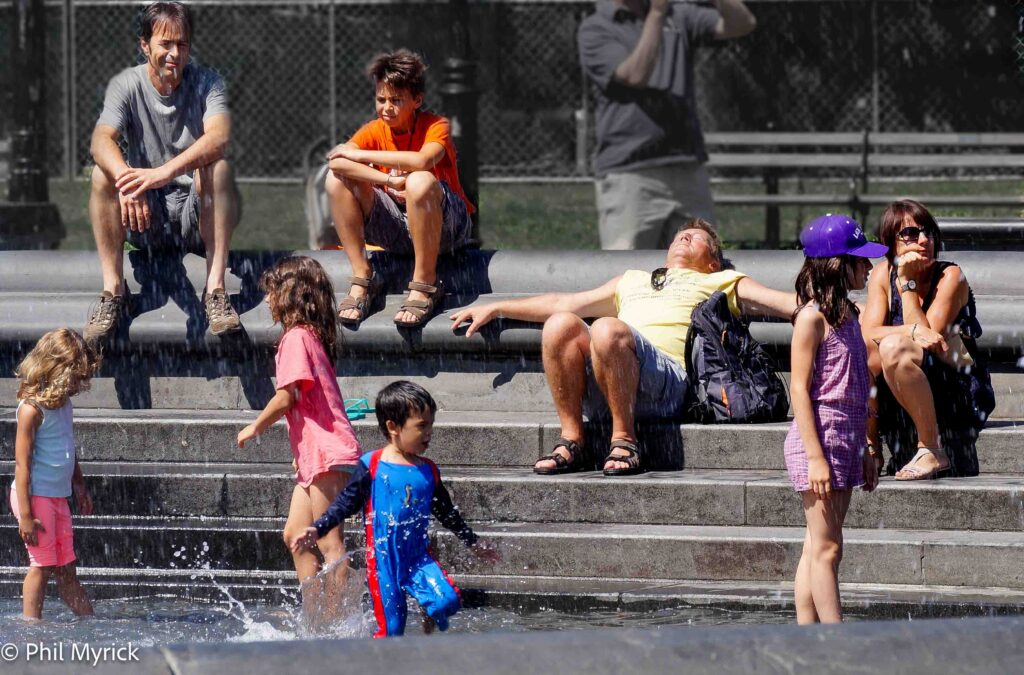
Play is one of the clearest indicators of spatial success.
Yet it rarely follows the script designers imagine.
Children test gravity. They climb edges. They run along surfaces never labeled as “play features.” Dogs discover fountains. Teenagers convert benches into stages.
These behaviors are not disruptions. They are revelations.
They show us what the environment affords. They expose the latent invitations embedded in materials, edges, and forms.
Rather than asking how to design play explicitly, we might ask a different question: how do we avoid suppressing it?
Spaces that tolerate improvisation tend to produce joy.
Where have you seen spontaneous play show up in a place that wasn’t designed for it?